Properties along the Arkansas and Little Arkansas rivers face rapid insect breeding cycles every spring and summer. High ambient humidity combined with dense oak, elm, and cedar canopies in established areas like…
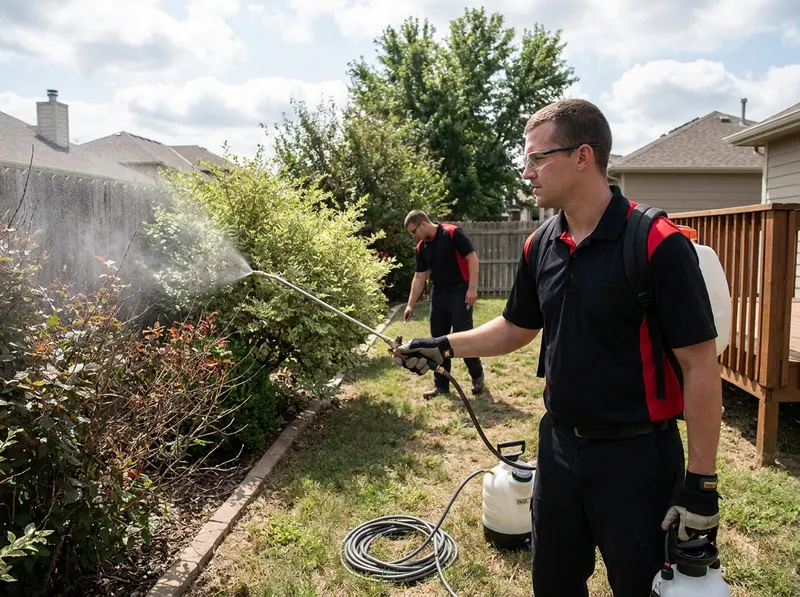
Properties along the Arkansas and Little Arkansas rivers face rapid insect breeding cycles every spring and summer. High ambient humidity combined with dense oak, elm, and cedar canopies in established areas like Riverside, College Hill, and Sleepy Hollow generates ideal harborages for disease vectors. Mosquito and tick yard suppression eliminates these active populations by targeting the specific microclimates where parasites rest, feed, and reproduce. Microencapsulated adulticides adhere to the underside of broadleaf foliage, shrub borders, and shaded fence lines, while selective biological larvicides neutralize stagnant water pockets in low-lying soil without affecting beneficial soil chemistry.
Decision-fit considerations determine whether a property requires active chemical suppression or baseline physical disruption. If standing water cannot be eliminated due to heavy clay retention in Orchard Breeze or Delano, physical drainage alone fails; chemical suppression breaks the continuous 7-to-10-day reproduction cycle. If lawn exposure is limited to manicured turfgrass without overhanging trees, targeted granular applications to the perimeter edge are sufficient. The structural trade-off centers on canopy coverage: dense undergrowth in older neighborhoods such as Forest Hills and Crown Heights requires higher spray-volume penetration, which extends barrier longevity to 21-30 days but demands precise application around residential boundary walls and ornamental plantings.
Treatment execution follows strict safety and biological protocols designed to safeguard family spaces. Residual applications bond to target surfaces within 45 minutes of application, after which backyards are fully dry and accessible for children and domestic animals. Field units avoid direct applications to blooming pollinator beds or active vegetable gardens, focusing chemical power directly on resting pest zones: the lowest 10 feet of tree limbs, dense ground covers like English ivy, and deep leaf litter where tick nymphs shelter. Properties situated near the open fields of South City or along the perimeter of Benjamin Hills benefit from calibrated perimeter bands that stop migrating ticks before parasites access outdoor living areas.
Every job gets a firm, written price after a free on-site visit.
Tell us about your mosquito and tick yard suppression job in Wichita and we'll send a clear, written quote, usually the same day.
 Halvex Extermination