Commercial food handling spaces face zero-tolerance regulatory thresholds across Sedgwick County. In high-density dining corridors like Delano, Crown Heights, and College Hill, commercial kitchens share aging brick…
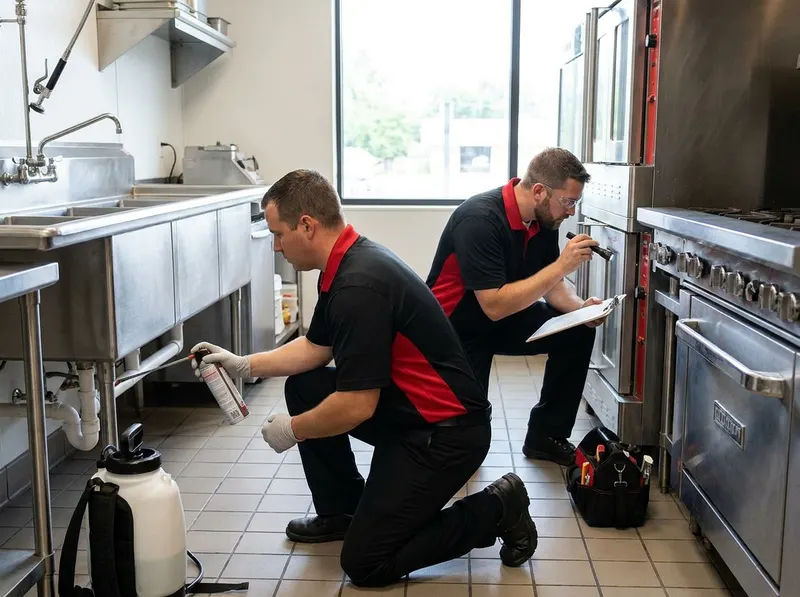
Commercial food handling spaces face zero-tolerance regulatory thresholds across Sedgwick County. In high-density dining corridors like Delano, Crown Heights, and College Hill, commercial kitchens share aging brick infrastructure and interconnected subterranean utility lines that house established German cockroach (*Blattella germanica*) colonies and rodent pathways. A commercial kitchen and facility pest protocol bypasses superficial baseboard spraying in favor of active void remediation, precision bait placement behind heat-producing condenser coils, and mechanical closure of 1/4-inch pipe penetration gaps. For older facilities near Riverside or South City with high water-table moisture, chronic drain fly and phorid fly outbreaks require direct biological digestion foams inside grease traps rather than standard chemical fogging, which fails to penetrate the bacterial biofilm where larvae thrive.
The operational decision hinges on structural vulnerability versus active contamination level. Facilities experiencing active daylight sightings of German roaches require an immediate three-stage flush-and-bait sequence using non-repellent formulations paired with insect growth regulators to halt reproductive cycles without driving insects into customer dining rooms. Conversely, warehouse facilities in Benjamin Hills or food production plants near Orchard Breeze and Forest Hills typically require perimeter containment protocols: exterior anchored bait stations spaced every 40 to 50 feet along building foundations, paired with automated internal air-curtain monitoring. Chemical applications in all food-prep zones follow strict USDA and FDA food safety criteria, utilizing non-volatile compounds that cure before morning prep shifts, ensuring staff, patrons, and food surfaces remain uncontaminated.
Operational execution follows a four-step framework: 1. A physical audit measures moisture levels, grease accumulation points, and entry voids along dock doors and plumbing walls. 2. Mechanical exclusion seals gaps exceeding 6 millimeters using copper mesh and silicone sealants. 3. Target application places micro-encapsulated baits and microbial bio-foams inside structural motor housings and floor drains. 4. Digital logging provides mandatory documentation for Kansas Department of Agriculture inspection audits, verifying treatment compliance and zero-pest thresholds.
Every job gets a firm, written price after a free on-site visit.
Tell us about your commercial kitchen and facility pest protocol job in Wichita and we'll send a clear, written quote, usually the same day.
 Halvex Extermination